

Transparency
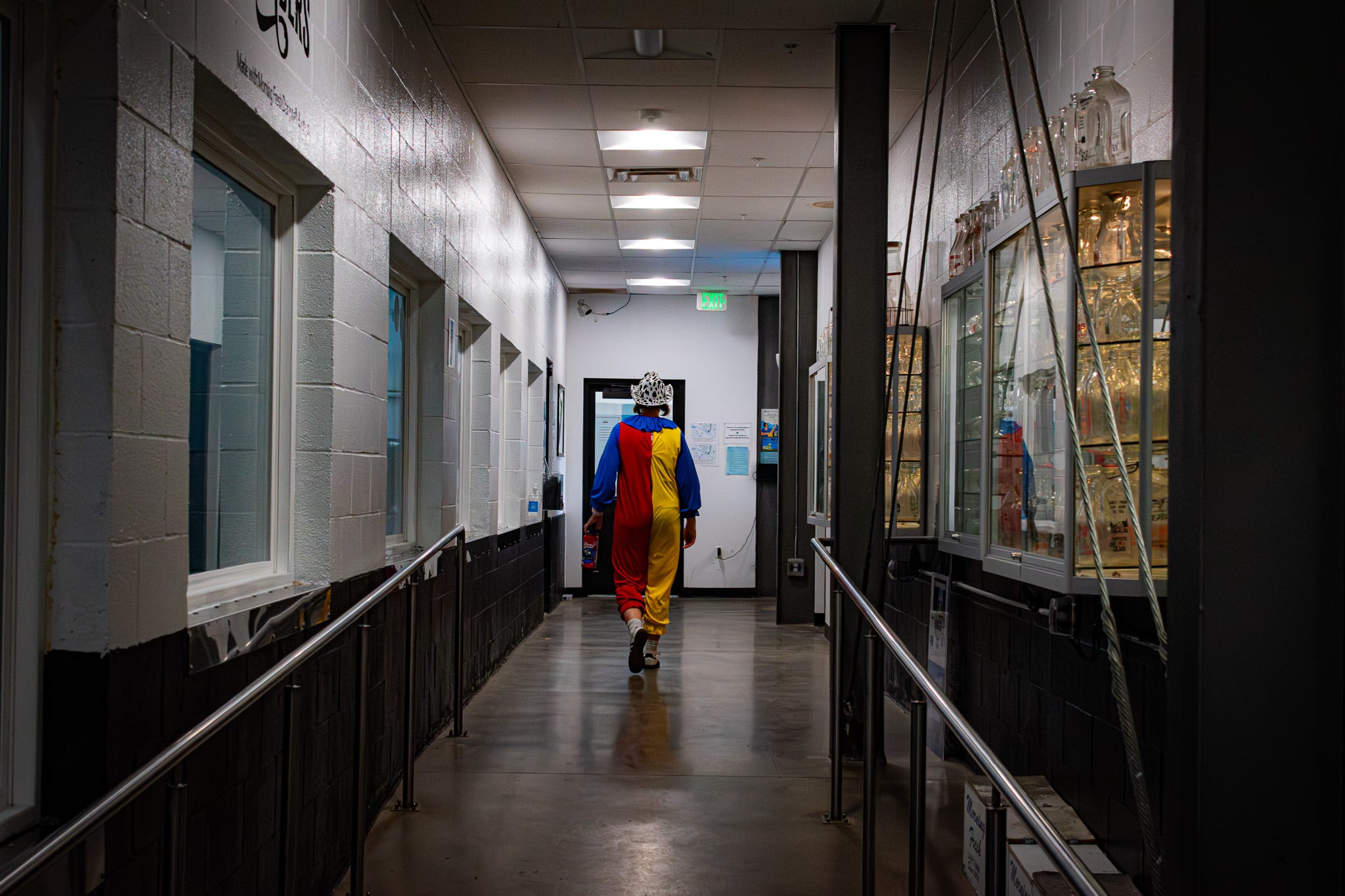
Glass bottles and open doors at a local dairy

I am standing in a room overlooking the “dairy-go-round” while a man in a cow costume explains the scene below. Children eat their Halloween candy as if this is all completely normal. I lock eyes with one of the cows just before she enters the chute, where milking equipment will be attached to her body. The platform turns, and she’ll go around and around with the rest of them.
Nothing here is normal. But because the process is visible, the story is protected.
If we can see it, it must be fine. If we can watch it, there must be nothing wrong.
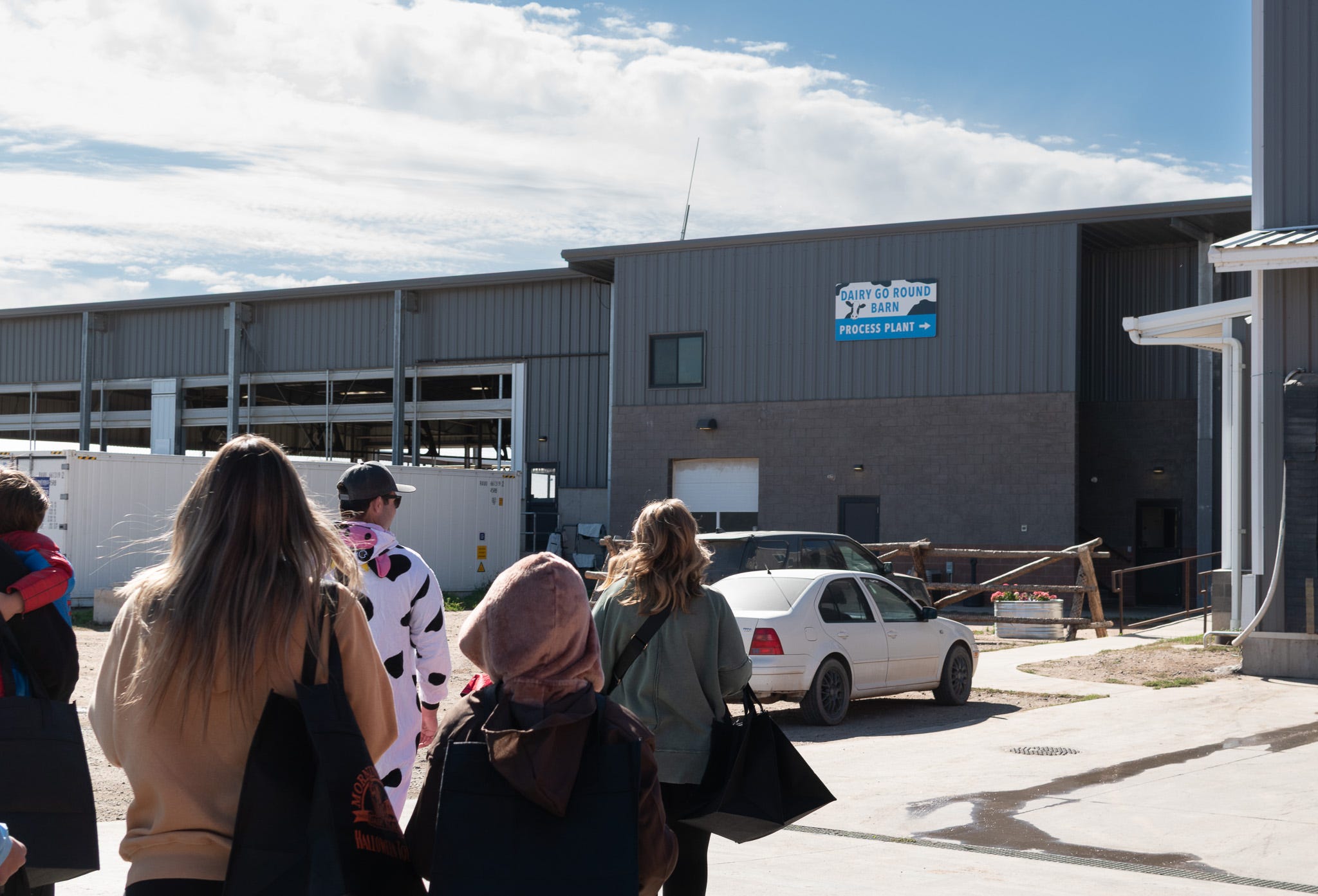
This is another way the industry uses transparency as a tool to turn things back on animal advocates. The familiar argument that “we don’t know what happens behind the walls of industrial agriculture” doesn’t apply here.
Their doors are open. They offer tours year-round.
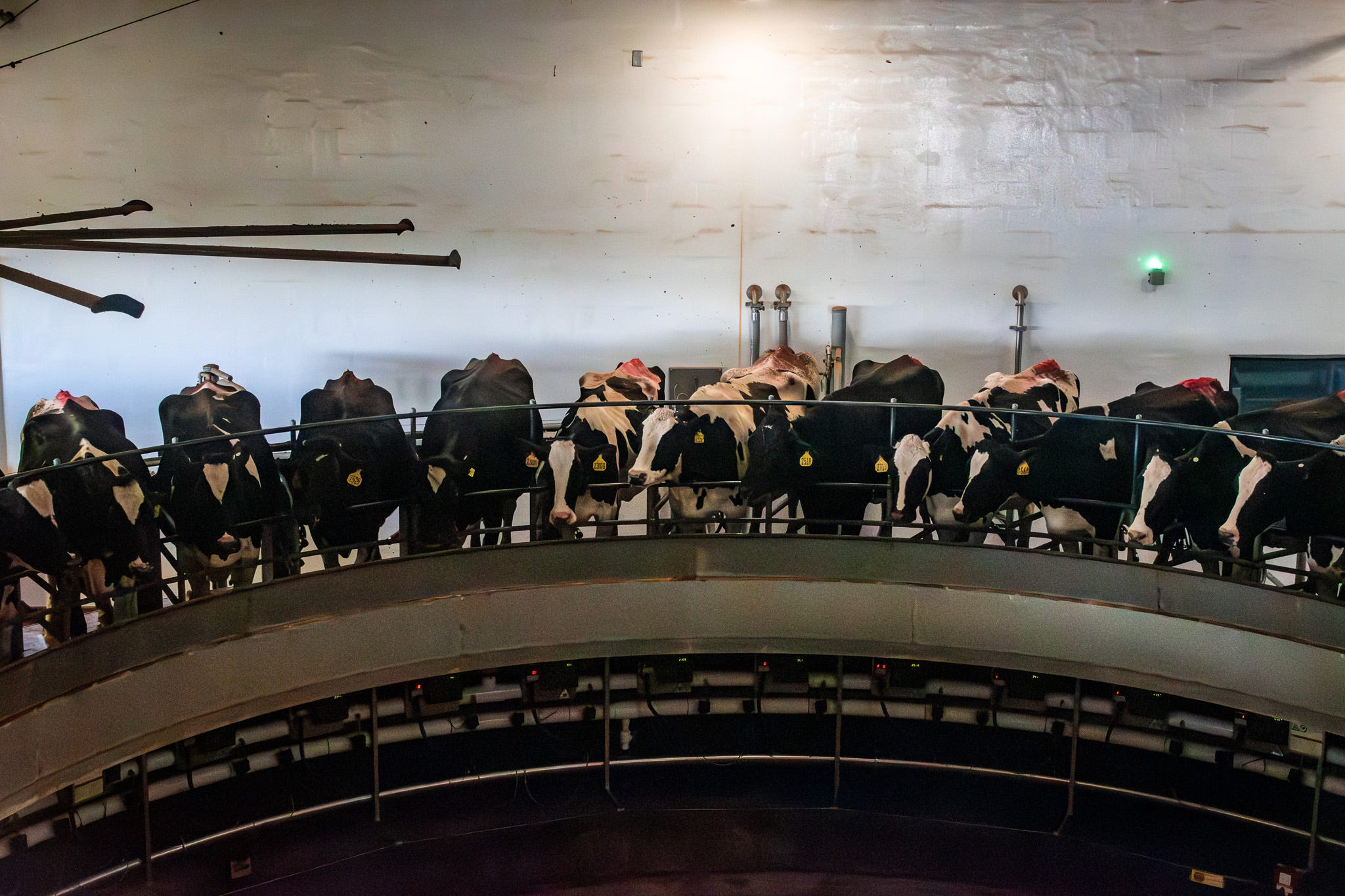
Every cow I saw that day was female. Every one of them has had her calves taken from her. The way they moved through the space felt like resignation — their bodies heavy, full of grief, full of milk that was meant for their young.
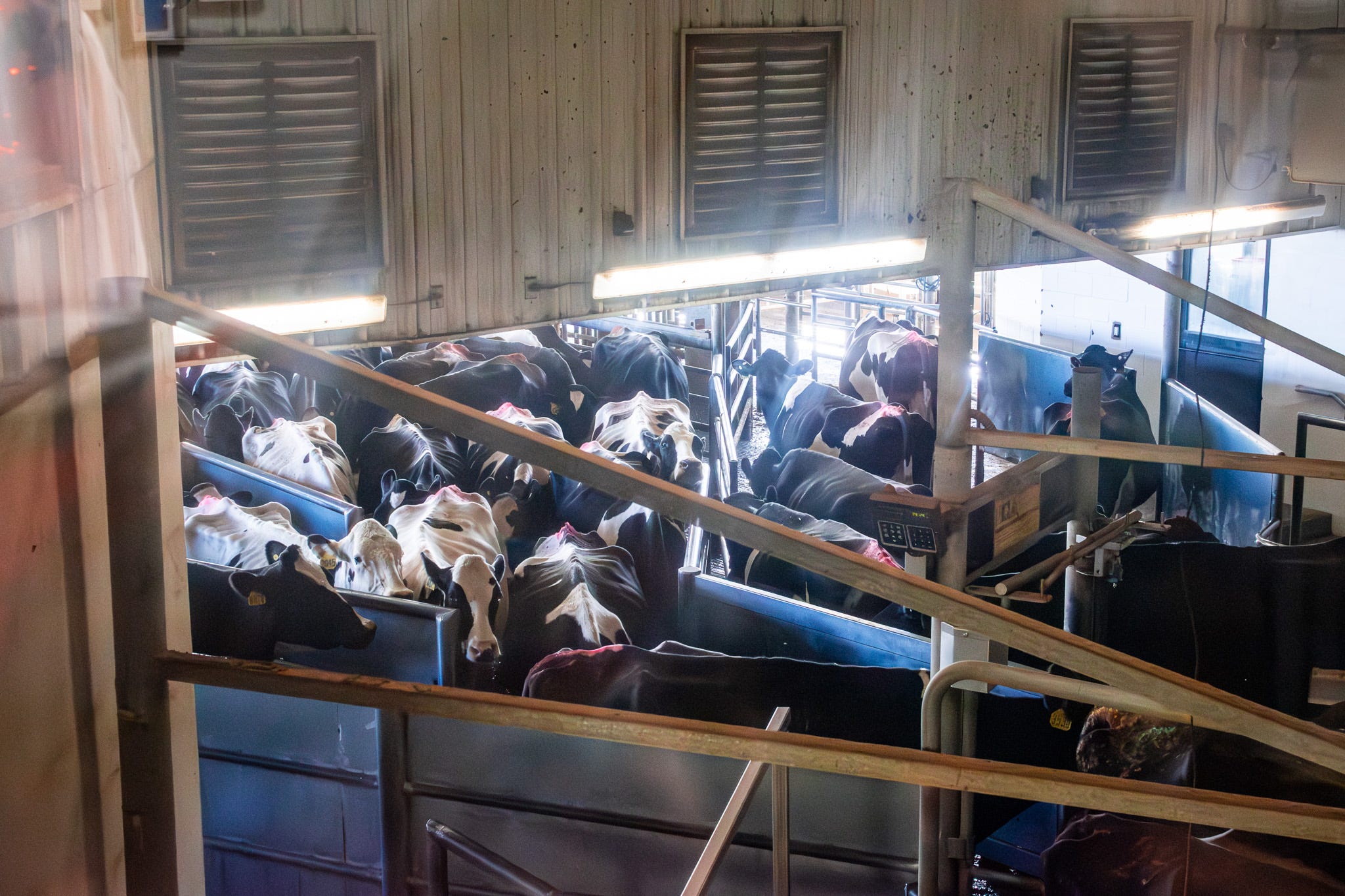
Wherever I go to photograph, there is usually one animal who stays with me. Above the fray of tired bodies, there is always one whose eyes still hold something — memory, resistance, or simply a knowing of how their lives are caught in the relentless system of animal agriculture.
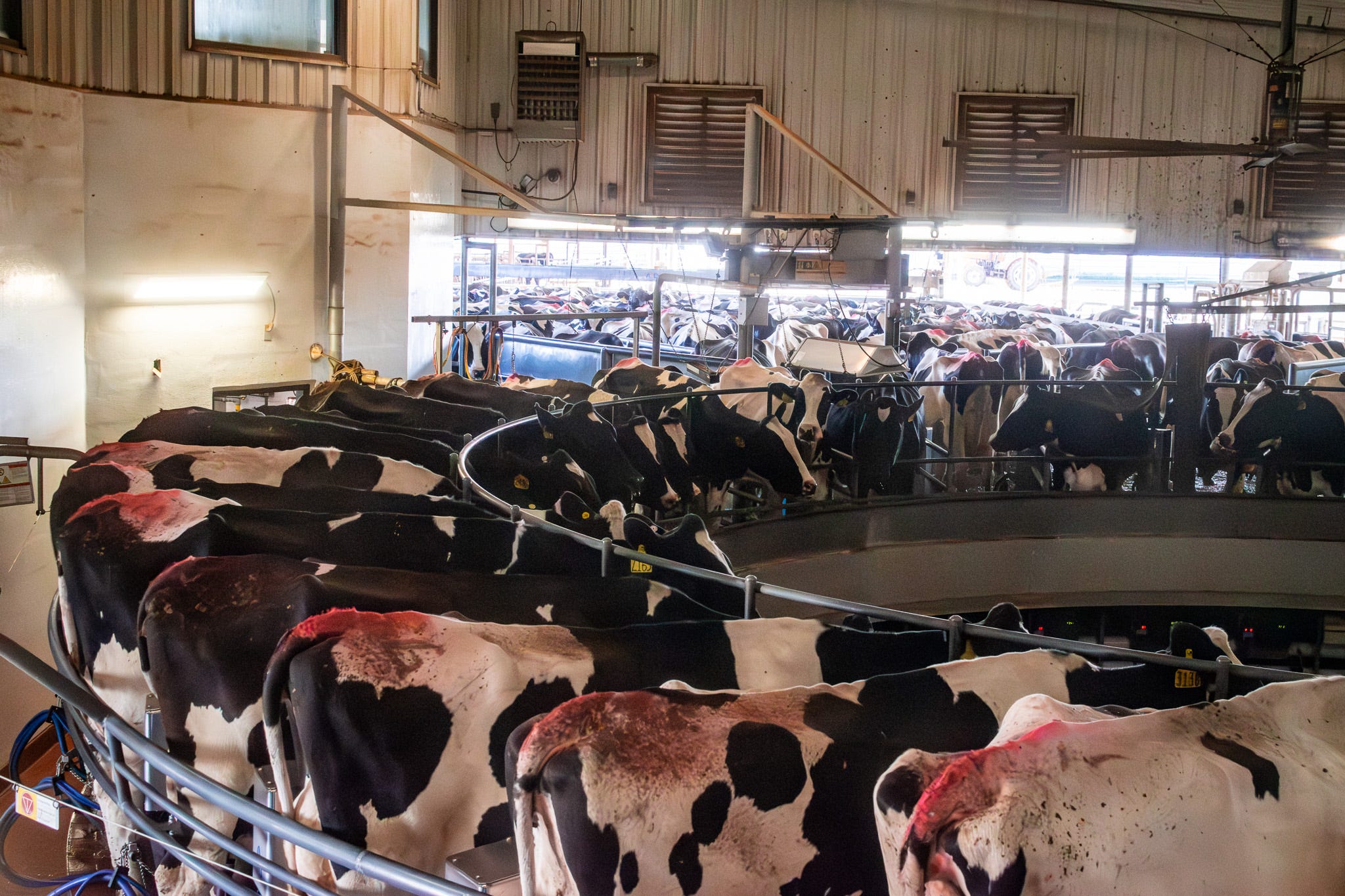
I think about them that night, the next day, and whenever I’m reviewing their images. When they meet my gaze, I feel it — and I feel my resolve to make each individual visible to more than just my eyes.
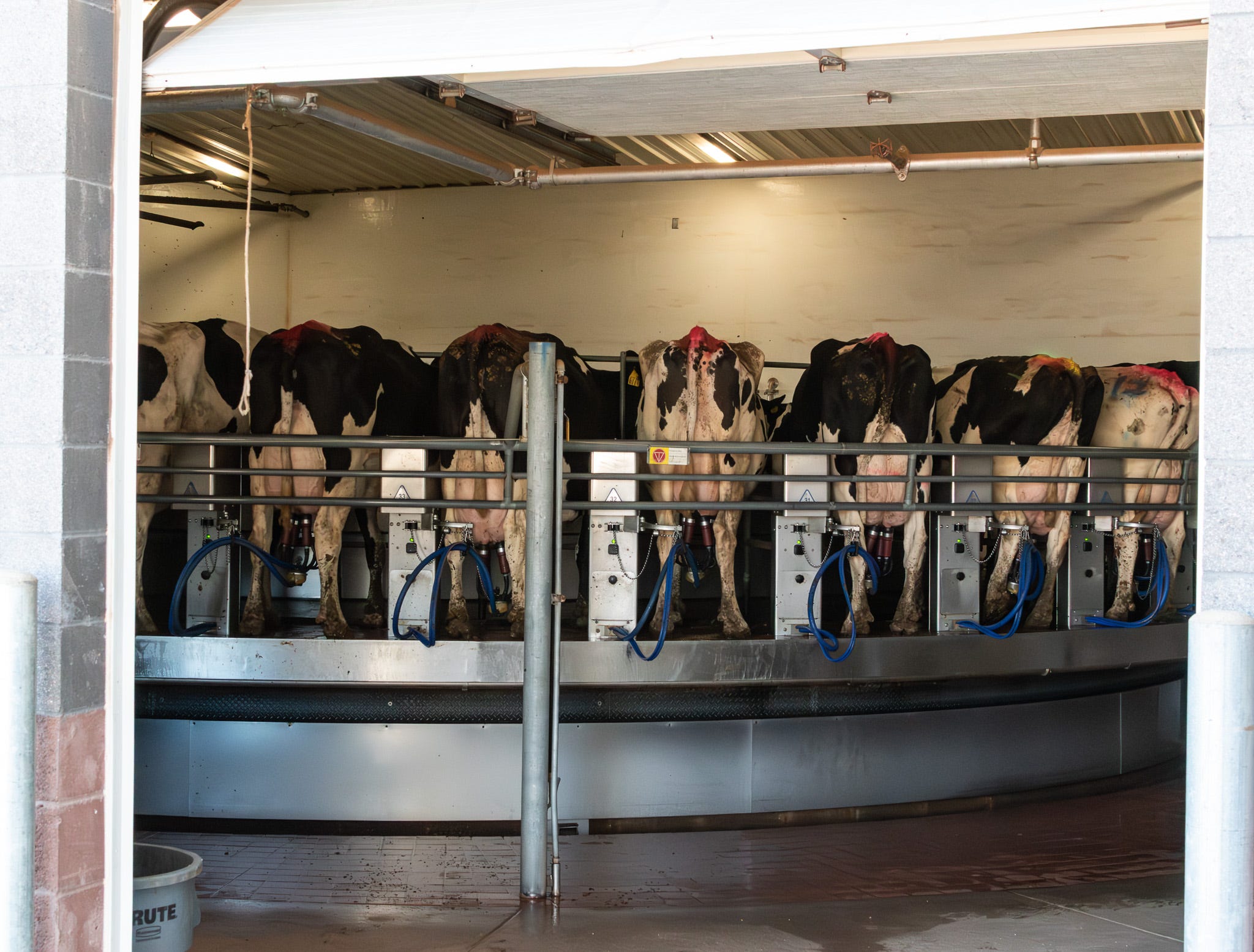
While the narrative continued during the tour, I saw a worker hit a cow, pushing her along as she exited the rotary. Maybe others saw it too. Maybe they didn’t let themselves feel what they felt. Around and around they go, and societal narratives run deep.
What I witnessed was a system of ownership and forced use — bodies exploited for what they can produce. A life shaped entirely by what is demanded of them. Each mother must be grieving and full of sorrow. Even amidst the explanations and normalization of the dairy industry, I could feel it.
They are not choosing this. They are not free to leave it. Their losses are not small.
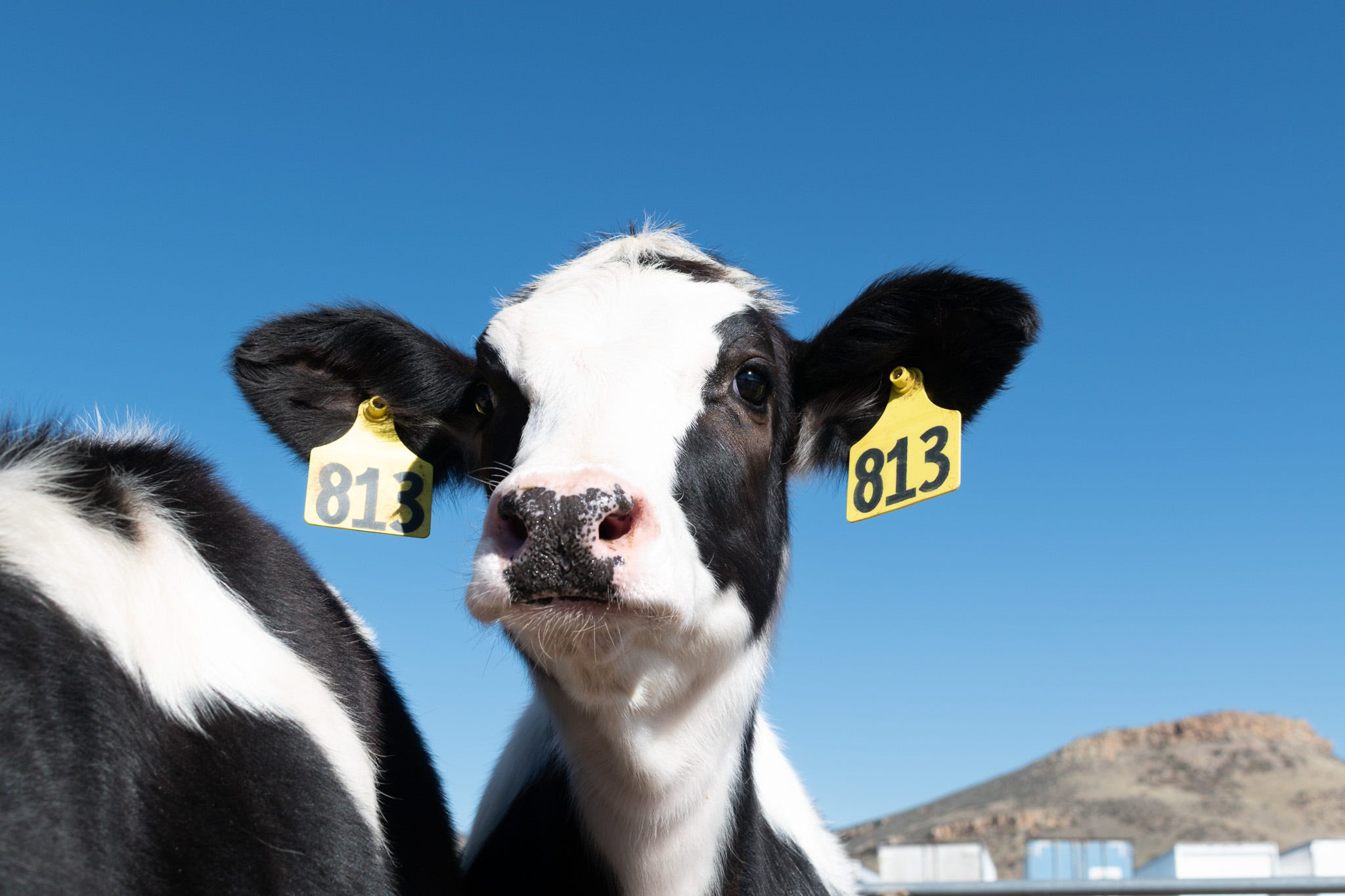
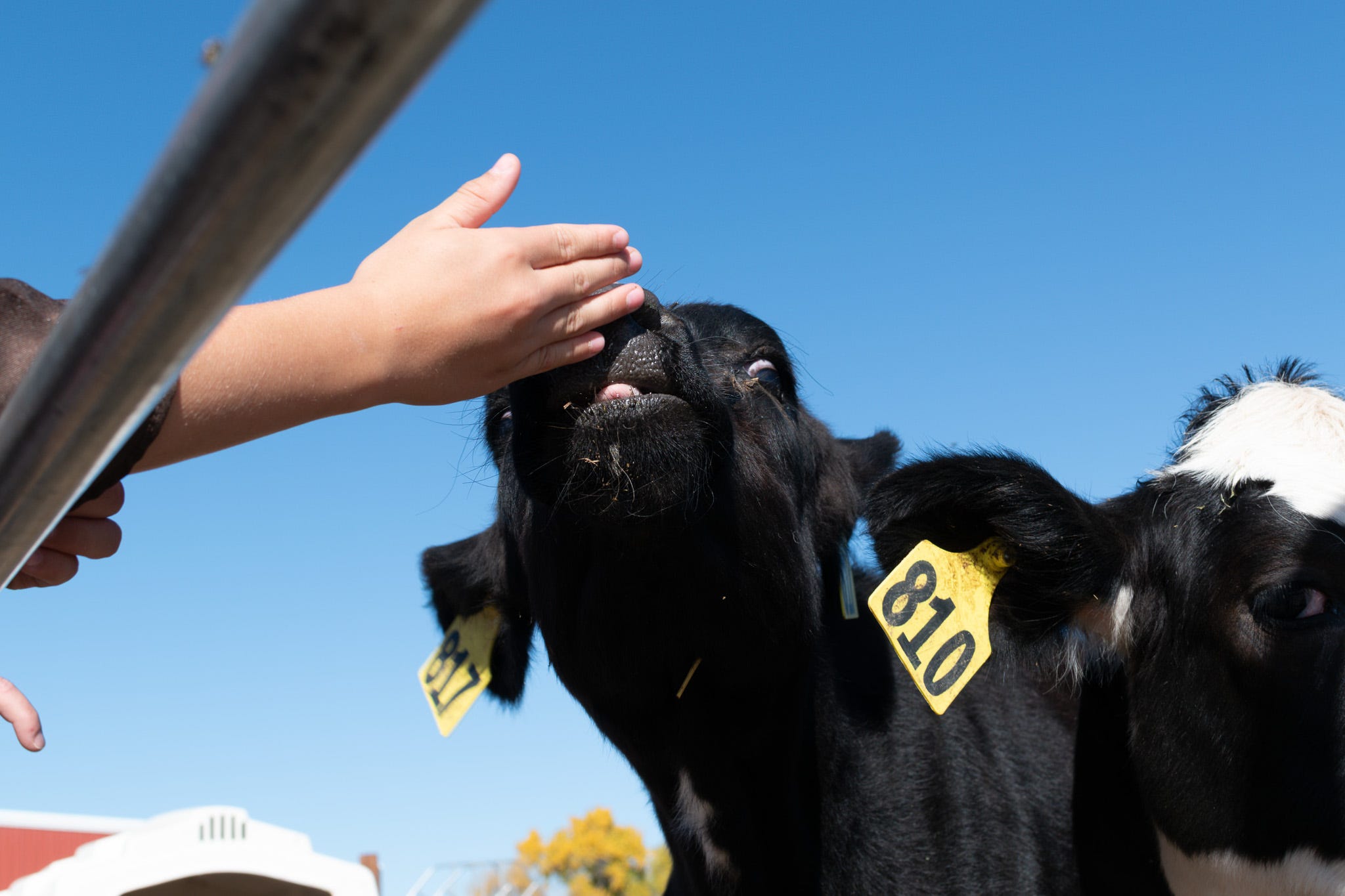
Outside, a calf — young enough that she was still curious, though she had already begun to hold back from human hands. She came to me only when I didn’t reach first. I let her choose. Her ears were soft, tagged with numbers that marked her place.
Number 813.
I wished her well. I wished her slowness in the hardening. I wished her whatever gentleness might still find her as she loses her first calf, as she steps onto the “dairy-go-round,” as she gives up her life to the story we’ve been sold in clear glass bottles.
And yet, what is coming to light, from what I can see and feel, is that people want to know the truth. They want to be inspired to change.
And that change is coming.
And the animals know.
Public lynchings once appeared on postcards as souvenirs, too. Doesn’t make it any less grotesque. That doesn’t look “natural” or pastoral. For the same reason that people hate cubicles, no one wants to be chained to their desk. But they’re “just cows” goes a long way in programming us to ignore what’s right in front of our faces.
Thank you for sharing this profound experience. So glad to have met you and be on this path together.